Zipline Raises $1.5B at $21.5B Valuation as Walmart Expands Drone Network
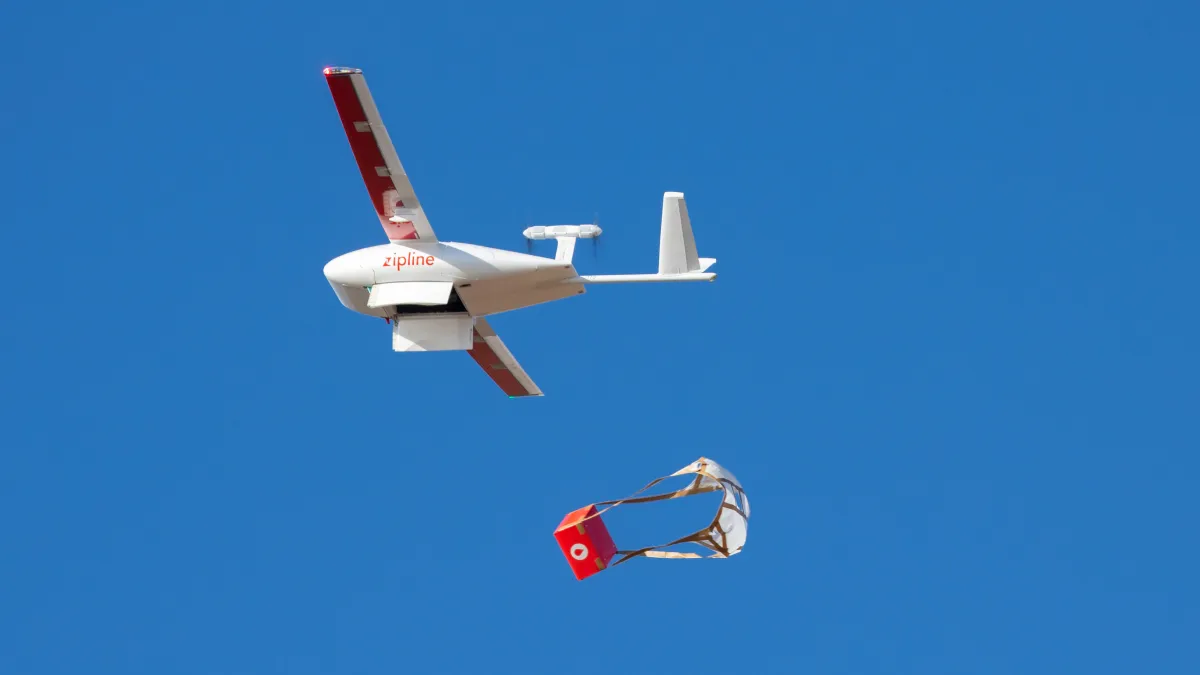
Drone delivery firm Zipline has secured $1.5 billion in funding, reaching a $21.5 billion valuation. Simultaneously, Walmart agreed to add 300 drone delivery sites across the US, up from 21. The capital will fund US manufacturing and hiring to build a nationwide network, with Uber also targeting one million daily deliveries by 2029.
Key points
- Zipline, a drone logistics company founded in 2014, raised $1.5 billion led by Paradigm, WCM Investment Management, and Layer Global.
- The funding round values Zipline at $21.5 billion, nearly triple its previous $7.6 billion valuation from January.
- Walmart agreed to expand its partnership by adding 300 drone delivery sites in the US, increasing from the current 21 active locations.
- Zipline plans to use the funds to expand manufacturing near San Francisco International Airport and hire staff for a nationwide network.
- Uber, a participant in the round, aims to reach one million drone deliveries per day with Zipline by 2029.
Major Funding Round for Drone Logistics Leader
Zipline, the autonomous drone delivery and logistics startup, has announced a significant financial milestone, raising $1.5 billion in a new funding round. This investment round values the company at $21.5 billion, marking a substantial increase from its previous valuation. The latest capital injection is led by Paradigm, WCM Investment Management, and Layer Global. The round also saw participation from a diverse group of major investors, including Valor Equity Partners, Fidelity Management & Research Company, Uber, Tiger Global, J.P. Morgan, ARK Invest, and Salesforce Ventures. This surge in valuation and capital reflects growing investor confidence in the commercial viability of autonomous drone delivery networks.
Walmart Expands Drone Delivery Infrastructure
Coinciding with the funding announcement, Zipline revealed a major expansion of its partnership with retail giant Walmart. The two companies have entered a new multi-year agreement to add 300 drone delivery sites across the United States. This represents a dramatic scaling up of their existing operations, which currently include 21 active drone delivery sites located in Texas and Arkansas. The partnership between Zipline and Walmart began in 2021, but this new deal signals a significant commitment to integrating drone logistics into mainstream retail distribution. The expansion aims to leverage Zipline’s technology to accelerate last-mile delivery for Walmart customers.
Strategic Use of Capital and Manufacturing Scale
Zipline has outlined specific plans for the deployment of the newly raised capital. The company intends to use the funds to expand its manufacturing facilities in the United States and hire additional staff to support the build-out of a nationwide drone delivery network. The company’s primary manufacturing factory, located near San Francisco International Airport, has the capacity to produce up to 20,000 aircraft annually. This infrastructure is critical for scaling operations to meet the demands of both Walmart and other potential partners. The focus on domestic manufacturing underscores Zipline’s strategy to localize production and reduce supply chain vulnerabilities.
Historical Context and Operational Growth
Founded in 2014, Zipline initially gained prominence in Africa, where it utilized autonomous drones to deliver blood and medical supplies in Rwanda, Ghana, and Nigeria. The company entered the US market in 2020, starting with medical deliveries to Novant Health in North Carolina. Its commercial retail operations began in earnest in 2022, with the Walmart partnership playing a pivotal role in its growth trajectory. The company has seen rapid adoption in specific regions; for instance, Zipline completed more than one million deliveries in the Dallas-Fort Worth area this year. This volume demonstrates the operational maturity of its systems in high-demand urban environments.
Market Expectations and Future Targets
The valuation jump from approximately $7.6 billion to $21.5 billion indicates a strong market reassessment of Zipline’s potential. Previous valuations from January were reported between $7.6 billion and $7.85 billion by various financial outlets. Keller Cliffton, Zipline’s founder and CEO, noted that customer demand has exceeded expectations for both Zipline and its partners. The involvement of Uber in the funding round highlights the broader industry interest in drone logistics. Uber has set an ambitious target of achieving one million drone deliveries per day in partnership with Zipline by 2029. This goal aligns with the broader industry shift toward autonomous last-mile delivery solutions to reduce costs and improve speed.
Competitive Landscape and Delivery Efficiency
Zipline’s drone delivery service offers significant speed advantages over traditional ground delivery methods. Data from October indicates that the median order arrival time for Zipline drones was 19 minutes after checkout, compared to 30 minutes or more for ground delivery. This efficiency is a key selling point for retailers looking to enhance customer satisfaction. As Zipline scales its network, the competition in the autonomous delivery sector is expected to intensify. The company’s ability to leverage its existing infrastructure and expand manufacturing capacity will be crucial in maintaining its competitive edge. The partnership with Walmart provides a large-scale testbed for these technologies, potentially setting standards for the industry.
Key takeaways
- Zipline raised $1.5 billion at a $21.5 billion valuation, led by Paradigm, WCM, and Layer Global.
- Walmart is adding 300 drone delivery sites in the US, expanding from 21 current locations.
- Funds will support US manufacturing expansion near San Francisco International Airport and hiring.
- Uber aims for one million daily drone deliveries with Zipline by 2029.
- Zipline completed over one million deliveries in the Dallas-Fort Worth area this year.
- Median drone delivery time is 19 minutes, significantly faster than the 30+ minute ground average.
Sources
The WireByte editorial team synthesises technology news from multiple primary sources, verifies the facts, and links every source. Articles are produced with AI assistance and reviewed under our editorial policy.